These findings are consistent with a recent study in melanoma cells in which dual treatment with the PI3K inhibitor PI-103 and rapamycin reversed compensatory Akt phosphorylation and induced cell cycle arrest, and xenograft studies demonstrated reduced tumor growth with this combination strategy. We extend these findings herein to define a potential mechanism by which the combination therapy promotes cell death. We found that BEZ235 alone blocked PI3K, mTORC1, and mTORC2 activity, in particular 4E-BP1 phosphorylation at a dose of 100 nM. However, BEZ235 was less effective in blocking rS6 phosphorylation. In comparison, temsirolimus completely abrogated phosphorylation of rS6 at 1 nM. Thus, combining both agentscompletely inhibited signaling throughout the pathway and synergistically induced cell death. Currently, combinatorial therapies are being applied to prevent resistance to single-agent treatments such as rapalogs. Examples of targeted small-molecule inhibitors under investigation include BEZ235, AZD2171; LBH589, LY294002, AZD6244, and ZSTK474. BEZ235 is a novel orally bioavailable inhibitor originally designed as a panPI3K family inhibitor based on the p110ckinase domain structure. Interestingly, when this compound was evaluated in preclinical studies, in vitro kinase assays revealed it also targets mTOR at a concentration of 20.7 nM. Therefore, BEZ235 is classified as a dual inhibitor that is capable of targeting both upstreamand downstreamof the PI3K/Akt/mTOR axis. BEZ235 has been reported to inhibit growth and proliferation and induce apoptosis in a variety of 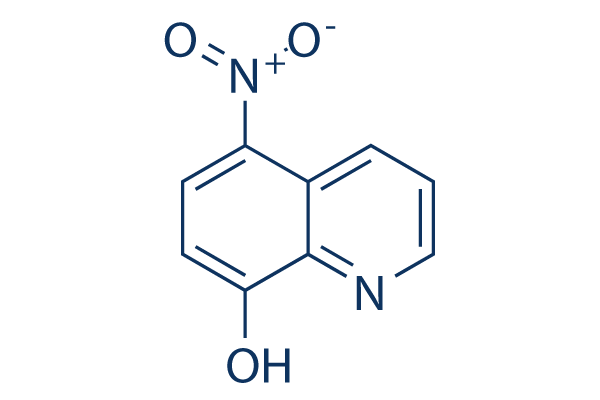 tumor cell lines, including breast cancer cells with mutant or amplified PIK3CA. BEZ235 showed antitumor activity in nude mice with few side effects. A recent report from a phase I study of BEZ235 in 59 patients with advanced solid tumors demonstrated antitumor effects and a favorable safety profile. ZSTK474, a pan-class I PI3K inhibitor, also demonstrated high potency against a panel of cancer cell lines and human tumor xenografts without toxicity to major organs. As discussed above, among all drugs tested, the agents which produced synergy with temsirolimus in our models were BEZ235 and ZSTK474. A main conclusion of our study is that combination treatment of ZSTK474 or BEZ235 with temsirolimus synergizes to decrease Y-27632 129830-38-2 viability in endometrial cancer cell lines. A potential mechanism of synergy from co-treatment with ZSTK474 and temsirolimus is the vertical NSC 136476 blockade of hyper-activated PI3K/Akt/mTOR signaling, specifically the simultaneous targeting of the upstream component PI3K by ZSTK474 and the downstream component mTORby temsirolimus. Temsirolimus alone only blocks rS6K activity downstream of mTORC1, whereas signaling through the other mTORC1 target 4E-BP1 is left intact. It has been documented in the literature that signaling through 4E-BP1 is required for Akt-mediated oncogenesis; therefore, inhibition of all components of this pathway is necessary to prevent tumor growth. Our data indicate that, in addition to inhibition of Akt activation, BEZ235 effectively blocks this residual signaling through 4E-BP1, which, when combined with temsirolimus inhibition of rS6K, synergistically blocks all arms of the PI3K/ Akt/mTOR pathway. Besides the observed inhibition of 4E-BP1 and rS6 with combined BEZ235and temsirolimus, another possibility might explain the observed synergy. Temsirolimus and BEZ235 target different structural domains of mTOR: temsirolimus is an allosteric inhibitor that targets the FKBP12-rapamycin-bindingdomain while BEZ235 is a catalytic inhibitor that targets the kinase domain.
The inhibitory potential of targeting two structurally distinct regions of the same protein may contribute to the synergistic effect
Leave a reply
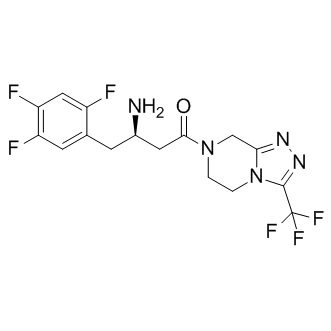 the polymerase enzyme. A previous study revealed high frequency of alterations of DSB repair genes in MSI positive ECs, where MRE11 and RAD50 exhibited heterozygous and homozygous mutations in 51% and 17%, respectively, without examining the impact of the loss of the proteins. Mutations of the MRE11 polyT allele are predominantly heterozygous mutations and it has been suggested that only those with mutations of two and more nucleotides as well as homozygous mutations have a functional impact in terms of loss of function. In this report, we cannot confirm the high frequency of intronic mutations but provide evidence that MRE11 protein is lost in a substantial proportion of ECs. Recently, it has been shown that whole exon sequencing of MRE11 revealed mutations in 1.9% of the EC tumours within the exons. However, intronic mutations have not been assessed, explaining why the frequency of MRE11 mutations is reported to be low not only in the study by Price et al. but also in a recent one by The Cancer Genome Atlas Research Network. PARP inhibitors have shown remarkable sensitivity in BRCA1/ 2-deficient tumour models in vitro as well as in clinical trials involving
 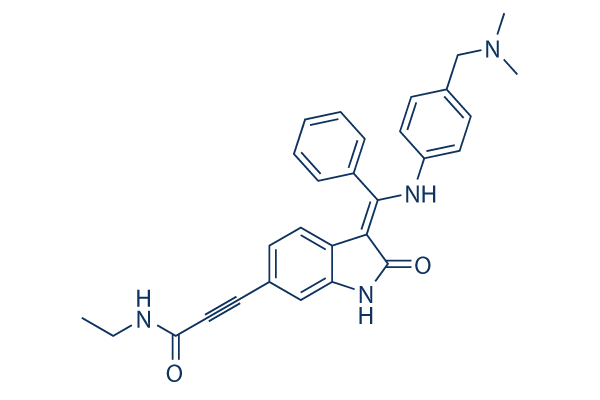 We found that all molecules previously reported to bind to c-MYC also bound to MYCN. Treatment with the small molecules furthermore interfered with the MYCN/ MAX interaction and caused protein degradation, apoptosis, differentiation and lipid formation to different extents in MYCNamplified NB cells. To date several research
  type I or type II EC. Whereas type I tumours are characterized by microsatellite instability and polymutations in different types of genes, almost all type II tumours harbour mutations of the tumour suppressor gene TP53. Recently, novel molecular subgroups have been described in a way akin to breast cancer. Based on their mutation profile and copy-number changes ECs are categorized into: the ultramutated, the hypermuted, the copy number low and the copy number high subgroup. The hypermutated subgroup includes mostly endometrioid EC, all harbouring microsatellite instability. These tumours are known to develop mutations in various other genes but also those involved in the DNA double strand break repair machinery. One of the most common recurrent mutation is found in the MRE11 gene, whose product is a part of the MRE11-RAD50-NBS1 – complex that is involved in the detection and repair of DNA double-strand breaks. MRE11 germline mutations that cause a lethal phenotype in mice are rarely encountered in humans and lead to an Ataxia telangiectasia-like disorder. Somatic mutations in MRE11, however, are frequently detected in colorectal cancers with MSI and have also been suggested for MSI-positive ECs. Mutations of the intronic poly sequence of MRE11 between exons 4 and 5 are frequent events in MSI positive colorectal und ECs. In EC, MSI is present in more than 20% of tumours and is mainly caused by epigenetic silencing of the MMR gene MLH1. This leads to changes in the number of nucleotide repeats found in coding and non-coding elements of many genes such as MRE11. Synthetic lethality occurs when two individually occurring mutations have no effect on cell viability, but cause cell death in combination. Inhibition of a synthetic lethal partner gene in cancer cells presenting a synthetic lethal mutation may prove an attractive strategy to develop specific anti-cancer drugs with minimal side effects in
  models, and the effects of MYC inhibition on normal tissue has been shown to be well tolerated and